
A zone that quit running, a head geysering water across the driveway, or a soggy patch that never dries out all point to the same thing, and none of them fix themselves. Left alone, a small break wastes hundreds of gallons and can leave a section of your lawn dead by the time you get around to it. At L.I. Sprinkler & Gutter Corp, we handle sprinkler repair throughout Levittown, NY, and nearby areas, pinpointing the cause of the failure and restoring full coverage without tearing up your yard.
Based in Levittown, NY, and in business since 2010, L.I. Sprinkler & Gutter Corp works on residential irrigation systems across Nassau County and the neighboring Long Island communities. Fixing existing systems is a daily part of what we do, whether the trouble comes from broken heads, damaged underground lines, leaking or stuck valves, controller or timer faults, low pressure, clogged nozzles, or uneven coverage. Diagnostics come first on every call, so the repair addresses the root cause rather than the symptom you happened to notice.
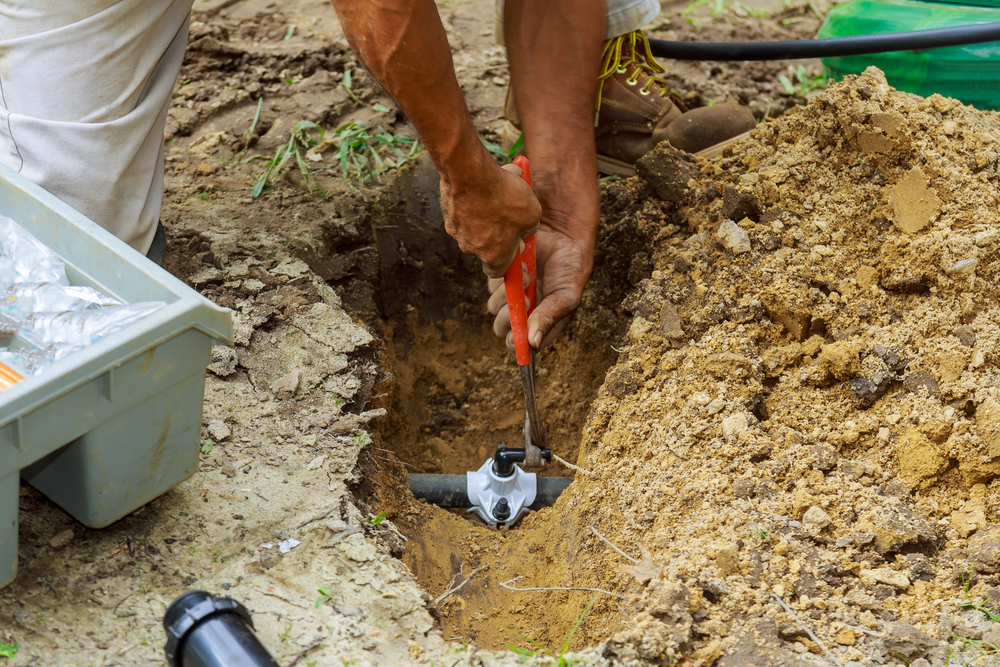
The complaint usually starts small. One corner of the lawn stopped getting water, or the system runs, but a stretch of grass keeps browning while everything around it looks fine.
Trouble underground rarely announces itself. A mower clips a head down to the riser, a shovel from a fence or patio project nicks a lateral line, roots wrap a fitting until it splits, or a valve diaphragm wears out and stops sealing. Any one of those bleeds pressure out of the zone, and the heads farthest from the valve are the first to fall short. What looks like a dry patch is often a sign of a part failure 20 feet away.
Finding it takes a methodical approach. We run each zone and watch the behavior, checking pressure at the heads, listening for water moving when it shouldn't, and looking for the wet ground, sunken soil, or bubbling that gives away a break. Wiring and solenoids get tested when a zone won't fire, and the controller gets checked for lost programming or a failed station. Once we've isolated the cause, we open up only what we need to, make the repair with quality parts, and backfill so the lawn recovers quickly.
Afterward, we cycle the entire system, not just the zone we worked on, because pressure problems tend to mask one another. You end up with even coverage restored, water going where it belongs, and no lingering leak quietly running up the bill.
Here's the range of problems we handle on a typical repair call.
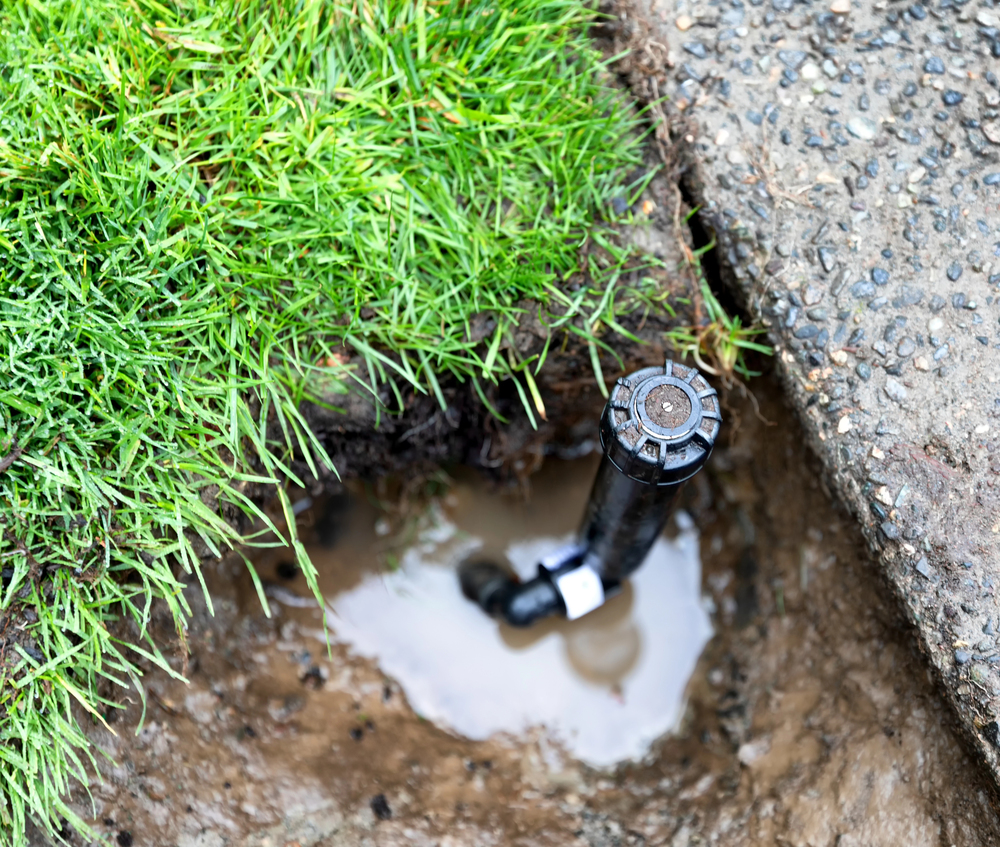
Every sprinkler system repair starts with running and observing the system, rather than guessing from a description over the phone. Zone-by-zone testing shows exactly where coverage breaks down and how the components are behaving under real pressure. The same tests are performed after the fix to confirm that everything is back to normal.
Mowers, snowplows, and ordinary wear take out more heads than anything else, and a snapped riser will empty a zone's pressure in seconds. Replacements get matched to the original spray pattern and throw distance so coverage stays consistent with the rest of the zone. Heads that sank below grade get raised back up while we're there.
Sand and mineral deposits build up in nozzles over time, narrowing the opening until the spray pattern collapses to a fraction of its former range. Cleaning usually restores them, though badly worn nozzles get swapped for new ones. Filter screens are pulled and rinsed at the same time, since that's often where debris collects.
Power surges, dead backup batteries, and failed stations can cause a controller to run zones it shouldn't or skip them entirely. Diagnostics cover the programming, the wiring at the terminal strip, and each station output to pinpoint whether the fault sits in the controller or out in the field. Repairs range from reprogramming to replacing the unit, and we'll tell you honestly which one makes sense.
Heads that spin unevenly, stall partway through their arc, or throw water across the sidewalk have usually lost their internal gear drive or gotten knocked off their set arc. Adjusting or rebuilding the head brings the pattern back within its intended range. Our lawn sprinkler repair work includes resetting arcs across the zone so neighboring heads still overlap correctly.
Pressure that drops off partway through a cycle points toward a leak, a partially closed valve, or a zone carrying more heads than the supply can handle. Readings at multiple points narrow down where the loss is happening. Fixes might mean repairing a break, replacing a failing valve, or splitting an overloaded zone.
Constant seepage around a head, water pooling near a valve box, or a section of lawn that stays soft between cycles all signal a leak. Seals, fittings, and connections get inspected first, since those account for most of what we find.
Cracked laterals and severed mainlines call for digging, and we keep the excavation as narrow as the repair allows. Damaged sections get cut out and replaced with properly rated pipe and fittings, then pressure-tested before anything gets covered. Sod goes back down carefully so the spot blends in within a few weeks.
Green stripes next to brown ones usually mean the spacing, head selection, or pressure in that zone isn't right. Evaluation looks at whether the layout was flawed from the start or something changed as the landscaping matured. Corrections might involve new nozzles, repositioned heads, or adding a head to close a gap.
Stuck valves cause zones that won't shut off and zones that never come on, both of which trace back to a worn diaphragm, a failed solenoid, or debris caught in the seat. Rebuilding is often possible, though a valve past its service life gets replaced outright. Our irrigation system repair work includes checking the wiring back to the controller, since a break in the line can look identical to a bad valve until you test it.
A good sprinkler system starts with the right layout for the property, and that's where our sprinkler installation service comes in. We design residential systems with proper zoning, thoughtful head placement, controllers, valves, rain sensors, and water-efficient options, then test and adjust everything before we wrap up the job.
Keeping a system in good shape throughout the year can help prevent small problems from turning into larger repairs. Our sprinkler maintenance service includes inspections, seasonal adjustments, spring start-ups, winterization, leak checks, pressure testing, head cleaning, and reviews of valves and controllers.
Older irrigation systems can often benefit from updated controls, higher-performing heads, or a few smart setup changes. With our sprinkler system upgrades and seasonal services, we handle system evaluations, controller upgrades, rain sensors, efficient nozzles, spring activation, fall shutdowns, winterization, and seasonal programming.
Properly sized and placed gutters help direct rainwater away from the home, preventing it from collecting near the foundation or landscaping. Our gutter installation service includes new residential gutter systems, replacements, downspouts, seamless gutter options, gutter covers, and layouts tailored to the property's drainage needs.
Leaks, clogs, sagging sections, and damaged downspouts can all interfere with the way a gutter system moves water away from the home. Our gutter repair and maintenance service includes cleaning, inspections, leak repairs, resecuring loose sections, downspout work, drainage troubleshooting, and preventive care to help keep the system working as intended.
Plenty of homeowners have their own reasons for calling our sprinkler company, and these are the most common.
We'll diagnose the issue and provide a repair quote before any work begins, at no cost to you.
Our owner spent years in irrigation before opening our doors in 2010, and that experience shows up on every service call.
Repairs get done with Hunter Industries, Irritrol, and K-Rain components rather than whatever's cheapest on the shelf.
Two years of workmanship coverage follows every repair we complete.
Homeowners can sometimes replace a simple damaged head, but the visible problem may not always tell the whole story. Professional sprinkler repair can address issues such as incorrect head height, damaged fittings, pressure problems, underground leaks, or repeated breakage.
Watch for soggy areas, unusually green patches, reduced pressure, water surfacing when the system runs, or a zone that suddenly performs poorly. A sprinkler repair technician can test the system and trace the problem before digging up more of the lawn than necessary.
Repair usually makes sense when the system still works well overall and only a few components have failed. Replacement or a larger upgrade may make more sense when repeated sprinkler repair visits, outdated controls, widespread leaks, or poor coverage continue to cause problems.
Leaks, damaged irrigation lines, partially closed valves, clogged nozzles, faulty valves, or too many heads operating on one zone can all reduce sprinkler pressure. A contractor can diagnose the system and determine whether sprinkler repair should focus on one component or a larger section of the irrigation layout.
Uneven watering can come from clogged heads, incorrect spray patterns, damaged nozzles, pressure changes, poor head placement, or components that no longer operate correctly. A professional sprinkler repair can restore coverage by identifying the cause and adjusting or replacing the affected parts.
FAQs reviewed by Jay Hurtado, owner of L.I. Sprinkler & Gutter Corp, an experienced and local lawn sprinkler system contractor.
One dead zone in July can cost you a whole section of lawn, and the fix is usually smaller than you'd expect. Call L.I. Sprinkler & Gutter Corp, and we'll find the problem.
Business Name: L.I. Sprinkler & Gutter Corp
Address: Levittown, NY, 11756
Phone: 516-225-5553
Business Hours:
Mon - Sat: 8:00 AM to 4:00 PM
Sun: Closed
2 Year Workmanship Warranty